Porta potty rental in Surprise, AZ means one thing on a 112°F afternoon: the unit stays clean, stocked, and serviced so nobody on your crew or guest list ever has to think about it. We deliver standard, deluxe flushing, and ADA-accessible restrooms from Marley Park and Sun City Grand out to Wittmann and Tonopah, and we quote a real number before we roll — the on-site minimum is $250.
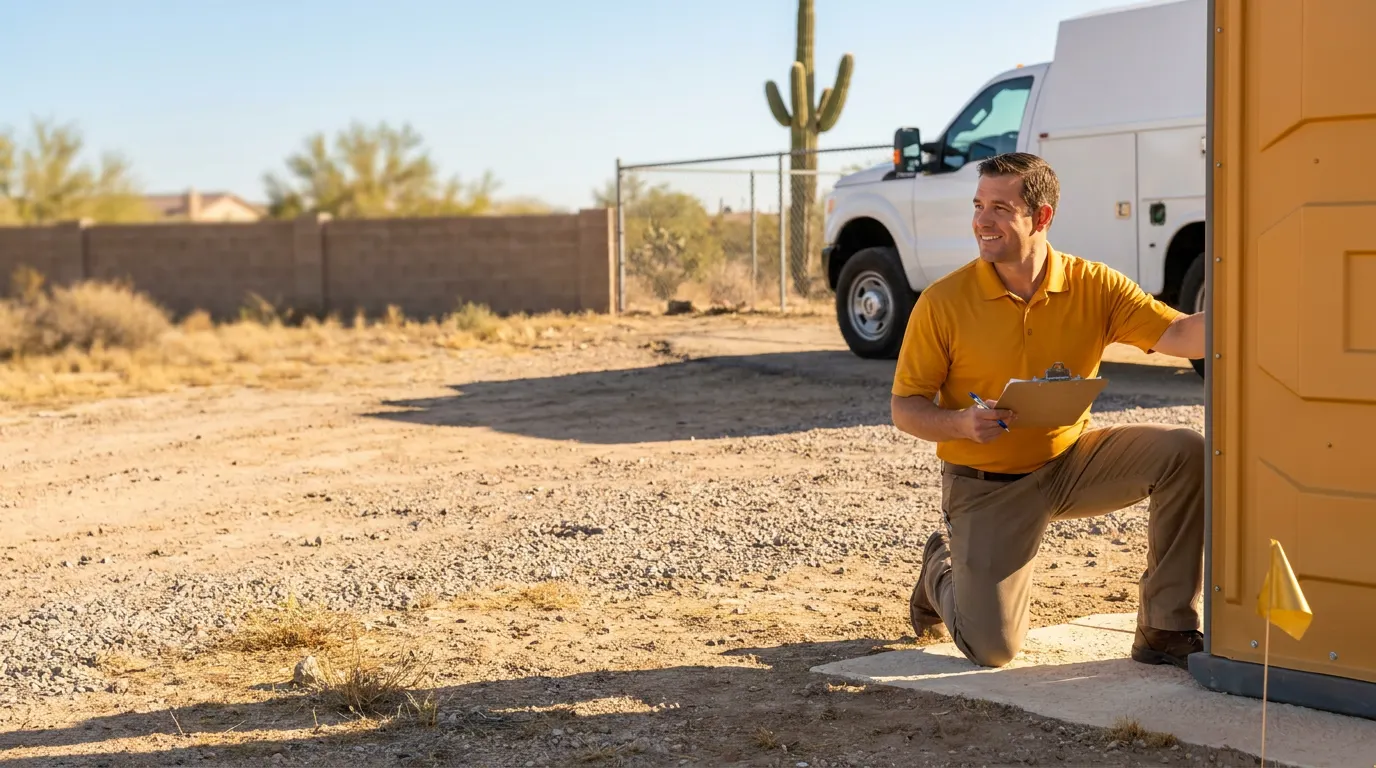
Porta potty rental in Surprise, AZ runs $250–$325 for a standard unit at a weekend event, $250–$375/mo for weekly construction service, and $375–$525 for a deluxe or ADA unit. The $250 on-site minimum applies to any single-unit delivery; final pricing depends on unit type, rental length, and service frequency.
Every service reflects the same meticulous attention to detail — whether it's a single job or a larger porta potty rental project across Surprise.
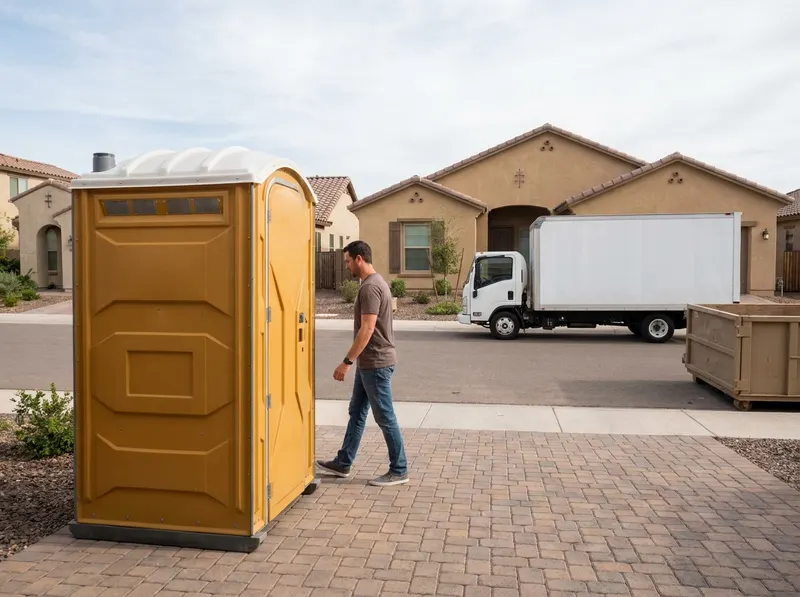
The workhorse single-stall unit for construction sites and general use, priced from the $250 minimum. It includes a urinal, a seat with cover, a toilet-paper holder, and a hand-sanitizer dispenser. On monthly jobsite rentals across Sierra Montana, Rancho Gabriela, and the Loop 303 corridor, one weekly service visit is included — the driver pumps the tank, restocks paper and sanitizer, and sweeps it clean. This is the unit most site supers want because it costs the least, handles heavy daily traffic, and needs only a reasonably flat spot to set down. When a lot has no water hookup, the self-contained tank is why a standard unit works anywhere a truck can reach.
View details →
A step up for weddings, backyard parties, and 55-plus community events where guests expect a sink. This unit adds a foot-pump flush, a fresh-water handwash basin, a mirror, and interior lighting for evening use. It needs a level pad, which is easy in most Marley Park and Greer Ranch backyards, and we place it discreetly with screening in mind for HOA neighborhoods. The interior light matters when an event runs past sunset, and the freshwater basin matters when food is served and guests will not tolerate hand sanitizer alone. Expect a wider drop footprint than a standard unit and a firmer pad, since the freshwater and flush tanks add weight.
View details →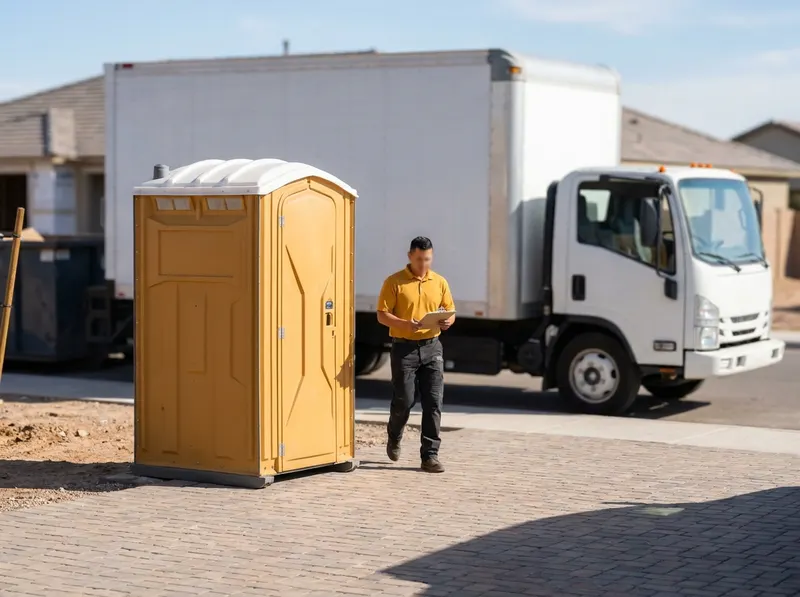
A wheelchair-accessible unit with a ground-level entry, wide door, interior grab bars, and room to turn — required whenever your event serves the public. Recreation Campus tournaments, Dysart Unified school events, and Ottawa University Arizona functions typically need at least one. It takes a wider, firm, flat footprint, so we confirm placement before delivery. The ground-level threshold matters because a step or ramp defeats the purpose for a wheelchair user or anyone with a walker, which is common at Sun City Grand and Sun Village gatherings. One ADA unit also doubles as a family or mobility-assist restroom, so it earns its footprint even at smaller events.
View details →
Monthly units for framing, roofing, and grading crews on unaddressed lots. We take a pin or cross-street and a gate code, and we know the honest drive time out to Wittmann, Morristown, and Tonopah so the unit is there before Monday's crew call. Weekly service is scheduled on a fixed day so your super never chases us. Construction demand in the northwest Valley climbs October through May when crews push work in cooler weather, and we can usually place a standard jobsite unit within a few business days. If a job grows from a slab crew to full framing, we add or swap units on the same account without restarting your service day.
View details →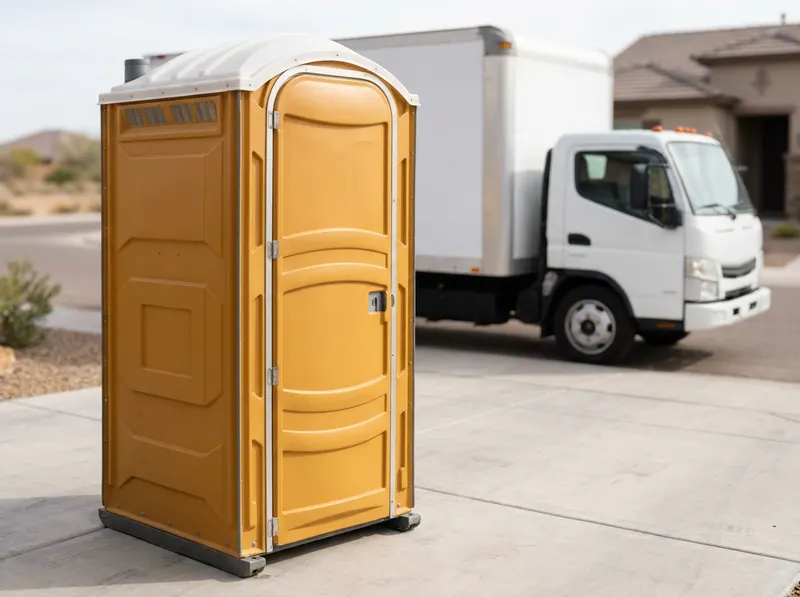
Short-term units for festivals, races, and community gatherings near Surprise Community Park, Surprise Lake, and the Civic Center. We run honest unit-count math based on guest count, hours, and whether alcohol is served, then deliver, stage, and pick up on your schedule. Book 3–4 weeks ahead during the February–April spring-training season, and 4–6 weeks ahead for ADA or trailer-style units around graduation season in May and fall community events. We stage units where the crowd actually flows rather than where they are easiest to drop, and we time pickup so the last unit is gone before your teardown crew leaves.
View details →
A single deluxe or standard unit dropped Friday and picked up Monday for graduations, quinceañeras, and backyard parties in Ashton Ranch, Litchfield Manor, and Sun Village. Priced from the $250 minimum with placement chosen for discretion and quick pickup. Ideal when your only bathroom is mid-remodel and you need guests routed away from the construction zone. We coordinate the Friday drop so it lands before your setup, not during it, and the Monday pickup so a plastic restroom is not sitting in the driveway all week.
View details →
Ongoing rentals for extended construction, remodels, and multi-month projects, billed monthly with weekly service included. Longer terms lower the effective weekly cost versus a one-week rental, because the delivery and pickup fees are spread across more weeks. We hold your service day and can add or swap units as the job grows. This is the right choice for a whole-home remodel in Original Town Site or a phased build in Asante, where the crew will be on-site for months and needs a fixed, reliable service rhythm.
View details →
A standalone foot-pump handwash station to pair with standard units where food is served or crews need to wash up. Each station holds fresh water and paper towels and is refilled on the same weekly service visit. Common add-on for event orders and food-vendor rows at Surprise Community Park gatherings. Pairing a handwash station with two or three standard units costs less than upgrading every unit to a flushing model, so it is the economical way to add a sink to a jobsite or festival.
View details →Porta potty rental in Surprise, AZ runs $250–$325 for a standard unit at a weekend event, $250–$375/mo for weekly construction service, and $375–$525 for a deluxe or ADA unit. The $250 on-site minimum applies to any single-unit delivery; final pricing depends on unit type, rental length, and service frequency.
You get a firm, itemized quote for your porta potty rental before any work begins — no surprises, no pressure.
Careful prep, tidy work, and a full cleanup when we are done. We treat your home and belongings like our own.
The same trusted, background-checked team from the first call to the final check.
If you need a restroom for a framing crew on a Loop 303 lot, choose a standard construction unit — it is the lowest cost and handles daily jobsite traffic. If you are hosting guests at a wedding, a Sun City Grand backyard event, or a fundraiser near Surprise Community Park, choose a deluxe flushing unit with a foot-pump sink and interior light, because guests expect a sink and it photographs cleaner in a residential setting. If your event serves the public — a Recreation Campus tournament, a Dysart Unified school function, or an Ottawa University Arizona gathering — you must include at least one ADA-accessible unit with a ground-level entry and grab bars to meet accessibility expectations. The trade-off is straightforward: standard units cost the least but offer no sink; deluxe units cost more and need a level pad; ADA units take a wider footprint and a firm, flat placement. For crowd size, plan roughly one standard unit per 50 guests for a four-hour event with no alcohol, and add units when beer or wine extends the day, because alcohol roughly doubles restroom trips. A ten-hour festival at Surprise Community Park needs more units than a four-hour ceremony with the same head count, since demand is measured in guest-hours, not just guests. If your only concern is keeping a two-person remodel crew going for a month, the standard monthly unit at $250–$375 is the whole answer; if you are running a wedding for 150 guests, two deluxe units plus one ADA unit is the honest configuration, not a single unit stretched past its limit. We run the count with you rather than upselling, and we would rather send one fewer unit that stays clean than one more that sits unused.
Every project gets a firm, written price after a free on-site visit. Ranges below for orientation.
Tell us about your porta potty rental job and we'll send a clear, written quote — usually the same day. Or just call and talk to a real Surprise pro.
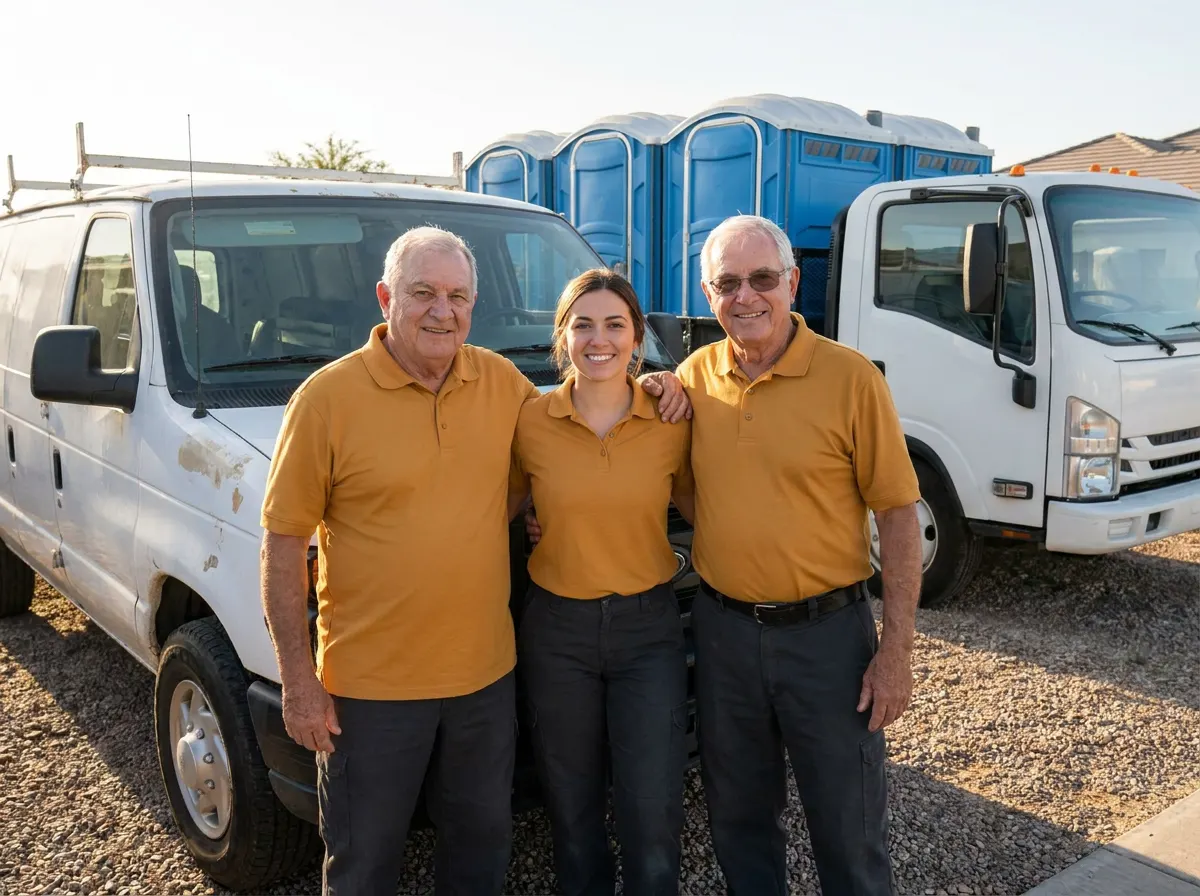
Surprise heat is the real problem most restroom companies leave vague — a unit that bakes in the sun on a July jobsite off Bell Road smells by mid-morning if it is not serviced on a heat-indexed schedule. Summer here runs well past 110°F for weeks at a time, which is exactly why we treat service intervals as a heat problem, not a calendar problem, and why we place units in the shade of a trailer or structure where one exists. We stake and place units to hold up through the monsoon microbursts that roll off the White Tank Mountains between July and September, since an unstaked unit is a liability in a 50-mph gust. We know the Grand Avenue and BNSF crossings and Bell Road timing well enough to give an honest drive time out to the far northwest edge of Maricopa County, so a super on an unaddressed Loop 303 lot gets a real window instead of a guess. In active-adult communities like Sun City Grand and Sun Village, aesthetic respect is a stated standard: we screen units, place them discreetly away from sightlines, and pick up promptly so a plastic restroom is never the first thing an HOA neighbor sees. Around Surprise Stadium during Texas Rangers and Kansas City Royals spring training, and at the Recreation Campus and Tennis & Racquet Complex during tournament weekends, February through April is our tightest window — that is when booking three to four weeks ahead is the difference between the unit count you want and whatever is left.
 Porta Potty Rental Surprise AZ